
This post may contain affiliate links. If you use them, it helps keep the blog going, which I appreciate.


I’ve always wanted the convenience of an airbrush machine, but not enough to actually do the research to find one suited for me and my situation. It wasn’t until I got my boo to try raising a Tamagotchi that I decided to pull the trigger on getting an airbrush machine. Those events seem unrelated, but future posts will make it make sense.
I’ve noticed that I spend comparatively more time prepping my projects. And in the moments when I don’t take the time to prepare, something annoying happens or I just hate the direction it’s going.
A major part of prepping for me generally involves priming or painting some sort of base. I tend to repurpose objects I already have or somehow got my hands on, so they’re not always perfect. Or I’ll have a bunch of things that I want to make the same color before I do anything else to them.
I guess I didn’t mind painting things by hand, but I didn’t love the streaks or having to remember to clean my brushes. I’ve lost so many brushes because I forgot to clean them.
After a fair amount of YouTube research, I decided to go all in on the Timbertech Airbrush Kit. There are cheaper alternatives, but I have no interest in testing airbrush machines. I wanted something that I knew would work straight out of the gate. This machine is used by a lot of figure-painting hobbyists, so it felt like a safe pick. I also liked that it came with an airbrush gun and the necessary hose.
Anyway, these are my initial thoughts on owning an airbrush machine for general crafting.
I’m Working Faster
I noticed pretty quickly that I was working a lot faster. Like, significantly.
I really noticed this when I was prepping flocked Birthday Bears for an upcoming project. I had set aside about an hour to do everything properly, and I had like half an hour to spare. I was so happy I had a snack.
Before the airbrush machine, I got most of my Birthday Bears from estate sales. They were all different colors, some were stained, and some had weird faces. I’d hand paint them either black, white, or gray so they’d produce consistent results once I got knee-deep into the actual project.
With the airbrush machine, the bears I’ve prepped literally take two easy coats and they’re good to go.
I sat there wishing I would have had this airbrush kit when I was making the bears for my Switch dock. So much time could have been saved.
Setting up doesn’t take a lot of time either. It takes me more time to bring her out than it does for me to actually do what I intend. If the setup was going to be long and gross, I wouldn’t have gotten the machine.
Batching Projects Actually Works Now

I’d try to batch projects before, but sometimes, since I was doing everything by hand, I’d quit. I’d let whatever I was working on dry and put it away for another day. In some cases, another year.
I know that sounds sad, but it’s the truth. I’m not nearly as resilient as a lot of the crafters out there.
Prepping via hand painting is tedious, and the longer I’d hold an object, the more things I’d see that I wanted to fix at the base level. It wasn’t the most productive way for me to approach this.
When I plan ahead, I tend to set aside a tray or basket of objects that are going to be the focal point of future projects. With the airbrush already out, I can just grab those and prep them too.
I feel unstoppable.
I’ll get through what I intended to paint so quickly that I realize I can expand and start prepping projects that are further in the future. Why not? If I have the supplies, let’s start giving them purpose and personality.
This has also made me more likely to finish what I start. If I can get through the prep lickety-split, I’m not wasting all my energy obsessing over paint strokes.
I mean, I’m still new to it, but feeling energized instead of annoyed or exhausted after prepping is very welcomed. When I still have creative energy after I prep, I experiment more. I feel like I bought myself that license by investing in an airbrush machine.
Weird-Colored Things, No Longer Weird
Weird is the wrong word, but you’ll get what I’m saying.
I used to work at an auction house, and sometimes I’d get things for free. My favorite things to get were those wood block signs. The problem is that they tend to have a lot of contrast, like dark words on a light background or vice versa.
When I’d prime these by hand, I’d never get them exactly blank. With the airbrush machine, two or three even coats gets the job done.
Learning to Take Care of the Airbrush Gun

Cleaning the gun itself does present a problem if you don’t take the time to learn how to assemble and reassemble it.
Since I watched so many videos about airbrush machines, the running theme around airbrushing was to take care of the gun. I mean, that makes sense. However, it’s not as intuitive as you’d think to disassemble and clean an airbrush gun. Watch a few videos before you attempt to do this if you’re new to the hobby.
Actually, I broke the tip of the gun that came with my machine.
And no, it wasn’t because I just decided to take it apart without doing any research.
When I was cleaning it, the tip that holds the needle needed to be screwed off using a tiny wrench. I slipped while I was tightening it, and the tip just snapped off.
I bought the kit knowing it came with an airbrush gun, but after researching and actually holding that gun, I knew at some point I’d want to try something different.
Well, that came sooner rather than later.
I like the gun I have now, and hopefully I don’t break it.
I’m Still Figuring Out the Paint

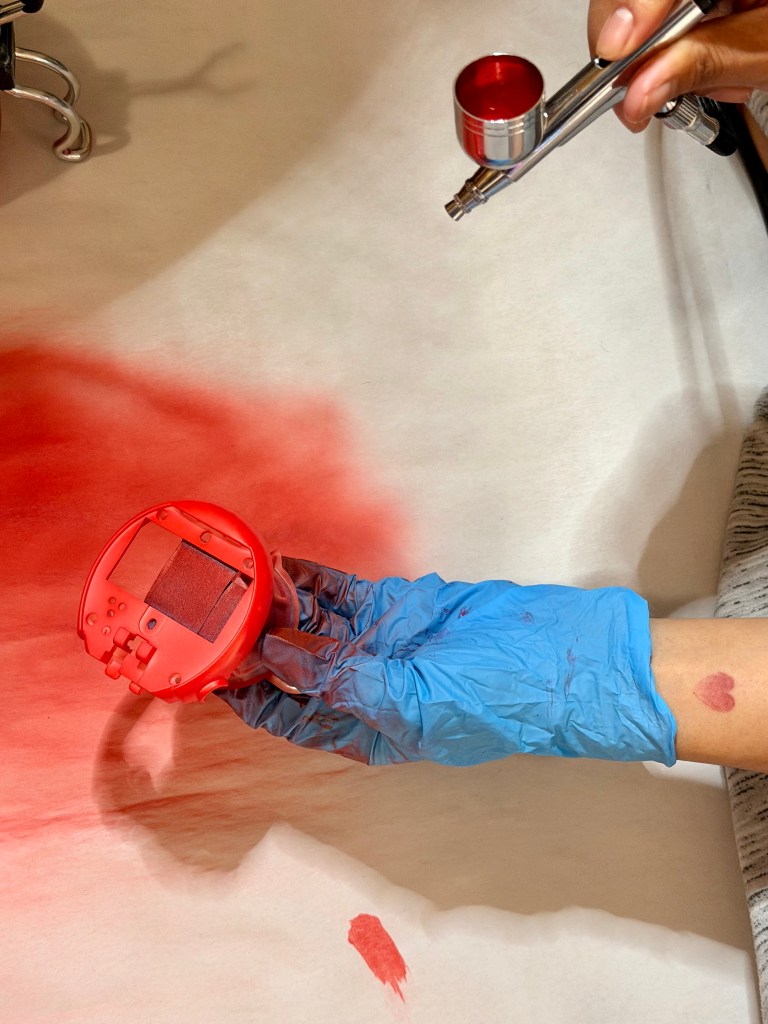
Paint has been a bit of a sore spot for me. Just like everything else, time and experience will tell.
There are so many different airbrush paints and ways to use thinners that it can become overwhelming. I bought a cheap party pack with a variety of colors, along with a few specific colors for certain projects. Those specific paints came from brands that a lot of experienced hobbyists use.
I went with the variety pack so I could practice and get a feel for what I was doing without feeling too precious about the paint.
Needless to say, I’m still finding my footing when it comes to how thin I like my paint and what pressure I like to shoot at. I start with what’s recommended and go from there.
In general, I’ve learned that I like to shoot at a higher PSI than recommended, which means I need a scrap of something nearby to test on before I carry it over to the actual project.
I can see this aspect of the hobby getting expensive if I don’t figure it out sooner rather than later.
Final Thoughts
As I slowly revive The Cute Effect, the projects keep rolling in the background. Getting myself an airbrush machine has made finding my footing and keeping that momentum so much easier.
My attention span is short, and I didn’t enjoy spending a lot of time prepping my projects. Cutting that time down has made me happier and significantly less annoyed. More importantly, I still have some creative energy left when the actual project starts.
I’m a firm believer that if you speak it into the universe, it will happen. The airbrush machine has been like the speaking, and the universe has been all the projects I’ve been able to get on their feet.
I’m looking forward to feeling more confident about finishing the things I start. It may just be a terrible personality trait I have, but at least I found a way to manage it.